
We may earn money or products from the companies mentioned in this post.
By Prep & Patch | Research updated October 23, 2026
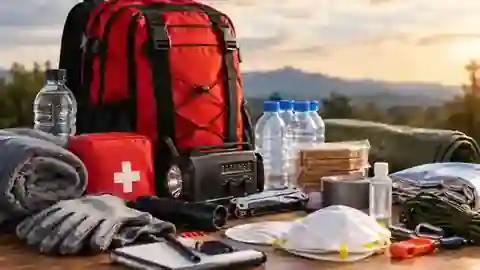
This is a research-based review using manufacturer specifications, emergency-preparedness guidance, and publicly available customer reports. Prep & Patch has not personally tested this kit. The featured image is an unbranded illustration, not a photograph of the Redfora product.
Buying a ready-made emergency kit sounds like the easiest way to prepare for an earthquake, hurricane, or extended power outage. Instead of shopping for dozens of supplies, you get one backpack that’s supposed to help you through the first 72 hours.
Redfora’s Ready For Anything Emergency Kit, starting at $135, includes food, water, a weather radio, first-aid supplies, shelter materials, and other useful equipment. But the label three-day emergency kit raises an important question: does the bag actually contain enough to get you through three days?
We examined Redfora’s published inventory, compared it with CDC and American Red Cross recommendations, and investigated what identifiable Redfora owners have said about their purchases.
Short answer: Redfora offers a convenient, organized starting point for emergency preparedness. Its biggest drawback is that the included drinking water represents only about 13% of the CDC’s recommended three-day supply. It’s worth considering if you want a prepacked emergency bag, but it shouldn’t be your entire preparedness plan.
Quick Summary
| Feature | Details |
|---|---|
| Product | Redfora Ready For Anything Emergency Kit |
| Starting price | $135, checked October 23, 2026 |
| Configuration reviewed | One person, three days, red backpack |
| Weight | 13 pounds |
| Emergency food | One 3,600-calorie ration bar |
| Drinking water | 12 individual water pouches |
| Key equipment | NOAA radio, flashlight, solar charger power bank, first-aid kit, emergency shelter, and tools |
| Customer rating | 4.8/5 across 274 seller-hosted reviews when checked |
| Returns | 60-day return policy; conflicting start-date wording requires clarification |
| Best for | Beginners wanting a convenient, organized emergency kit |
| Main concern | Inadequate water for a complete three-day emergency supply |
Specifications are for the one-person, three-day red-backpack version. Redfora sells other configurations and may substitute certain components.
What Is the Redfora Ready For Anything Emergency Kit?
Redfora sells preassembled emergency kits designed to make preparedness more manageable for people who don’t want to research and purchase every item separately.
The company originally developed its products around earthquake readiness under The Earthquake Bag name. Its current lineup covers broader emergencies, including evacuation situations, storms, and power outages.
The Ready For Anything Emergency Kit is one of its main products.
Rather than supplying only food and water, it combines several categories of equipment: communication, lighting, tools, temporary shelter, hygiene, first aid, and emergency rations.
It’s sold in configurations for different numbers of people and durations, with backpack and roller-bag choices.
This review focuses on the one-person, three-day red-backpack version, because the contents and quantities differ between configurations.
The product’s main selling point is convenience. Redfora selects and organizes the components so you don’t have to build the entire kit yourself.
That convenience is valuable, but it shouldn’t be confused with proof that every included item will be sufficient for every emergency.
How the Redfora Emergency Kit Works
Unlike a single-purpose product, an emergency kit doesn’t have one function to test. Its usefulness depends on whether its components address the problems you might actually face.
Redfora divides supplies into organized categories and provides a guide to help owners familiarize themselves with the equipment and add personal necessities.
Here’s how the main components are intended to help.
Lighting, communication, and power
The one-person configuration includes a NOAA radio/flashlight/charger, solar charger power bank, whistle, multifunction tool, work gloves, safety glasses, rope, and several smaller accessories.
A radio and flashlight are especially relevant during electrical outages, when ordinary lighting and internet access may be unavailable.
The American Red Cross recommends a flashlight, radio, extra batteries, and communication supplies for emergency preparation.
What remains uncertain: Redfora’s main product listing doesn’t provide enough detailed specifications to independently verify radio runtime, power-bank capacity, or how well solar charging works under different conditions.
These are important limitations if you expect to charge a phone repeatedly during a prolonged outage.
Shelter and protection
The kit includes an emergency poncho, Mylar sleeping bag, and two-person tube tent.
These are compact items intended for temporary emergency use. They aren’t substitutes for a properly insulated sleeping system or a conventional weather-resistant camping shelter.
It also includes three 3-ply masks.
Those masks should not be assumed to provide the same protection as a properly fitting NIOSH-approved N95 respirator. The CDC explains the differences between mask and respirator performance.
First aid and hygiene
Redfora includes a first-aid kit, toothbrush, toothbrush cap, comb, hand towel, soap container, two empty two-ounce bottles, and a bag for personal items.
One detail worth noticing: the empty bottles and soap container are not the same as supplied toiletries.
The main product listing also doesn’t provide a full component-by-component inventory of the first-aid kit.
That makes it difficult to judge its medical usefulness without opening it and inspecting the contents.
For someone with prescription medications, allergies, or medical equipment requirements, personalization is essential.
Our assessment: The assortment is practical, but buyers should test the electronics, inspect the first-aid supplies, learn how to use the shelter, and add necessary personal items before considering the bag ready.
Pricing, Configurations & What’s Included
Redfora listed the one-person, three-day red-backpack kit at $135, reduced from an advertised regular price of $165, when checked October 23, 2026.
The product page also offers options for additional people, seven-day coverage, and different bag styles. Prices and equipment quantities depend on the selected configuration.
What’s included in the $135 configuration?
| Category | Listed contents |
|---|---|
| Food and water | 3,600-calorie food bar, 12 water pouches, personal water filter straw |
| Communication and power | NOAA radio/flashlight/charger, solar charger power bank, whistle |
| Tools | Multifunction tool, rope, safety glasses, work gloves, sewing kit |
| Shelter | Tube tent, Mylar sleeping bag, emergency poncho |
| Medical and hygiene | First-aid kit, 3-ply masks, basic personal-care accessories |
| Organization | Red backpack, Rapid Pack Guide, personal-items bag |
Redfora says the food and water have a five-year shelf life from manufacture, with kits packed within six months of manufacture.
The company also offers a replacement-reminder system and sells a Food + Water Refresh kit, listed at $13.95 when checked.
That’s a useful convenience, although buyers should still inspect the expiration dates printed on the actual supplies.
What you’re really paying for: A collection of equipment, its organization, and the time saved by purchasing everything together.
Whether that’s worth $135 depends on how much equipment you already own and how much you value the convenience.
What Real Redfora Customers Say
Redfora’s own emergency-kit collection page displayed a 4.8 out of 5 rating across 274 reviews when checked October 23, 2026.
That’s encouraging, but it’s a seller-hosted rating. It shouldn’t be treated as equivalent to independent product testing.
We also searched Reddit preparedness discussions and Redfora’s published customer testimonials to understand what people have actually experienced.
The evidence is limited: there are identifiable owners, but relatively few detailed independent reports about long-term durability or the exact kit currently sold.
Owners appreciate having their supplies organized
A recurring theme in Redfora’s published testimonials is the convenience of having emergency supplies gathered in one accessible place.
One customer, identified as Jessica from Seattle, described purchasing two two-person bags and appreciating their compactness and organization.
Another, Jeff from San Francisco, reported that his bag arrived neatly packed and specifically mentioned appreciating the hand-crank flashlight and phone charger.
These accounts make sense in the context of the product’s design: buyers aren’t simply purchasing individual accessories. They’re paying to avoid the work of gathering and organizing them.
The limitation: These are testimonials selected and published by Redfora. They may concern earlier versions of the product and cannot establish how the current components perform.
Source: Redfora customer testimonials.
A Reddit owner confirms the replacement-reminder feature
In a January 2022 r/AskSF discussion about earthquake kits, a commenter who said they previously owned a Redfora kit noted that the company provided reminders when the food was due for replacement.
That’s a specific, firsthand ownership report that supports the existence of Redfora’s refresh service.
However, the commenter didn’t describe testing the equipment or using the kit during a disaster.
Another Reddit user reports owning a Redfora go-bag
In a February 2024 r/sandiego emergency go-bag discussion, one participant identified Redfora as the brand of their prepared evacuation bag.
The comment provides another direct ownership report, but not a detailed evaluation.
It doesn’t establish the quality of the backpack, the effectiveness of the tools, or how the supplies held up under real emergency conditions.
One customer reported a backpack-strap failure
The most specific product defect we found appears in Redfora’s own customer testimonials.
A customer identified as Kevin McHaley from San Francisco reported that a bottom backpack strap pulled loose when he first removed the bag from its packaging.
He also reported that Redfora responded by sending a replacement backpack and an additional lantern/radio.
This is useful information for two reasons: it describes a specific physical problem and the company’s reported response.
But it’s a manufacturer-published account, not an independently verified service record. Nor does a single complaint establish a recurring defect across current products.
What the customer feedback actually establishes
The available reports suggest that organization, convenience, and the company’s expiration-reminder service are meaningful benefits for some buyers.
They provide much less evidence about long-term durability, radio reliability, water-filter performance, or use during an actual disaster.
Our takeaway: Customer experiences support Redfora’s convenience argument more strongly than they support any claim of proven emergency performance.
Does the Three-Day Preparedness Claim Hold Up?
This is where the product deserves the closest examination.
Redfora advertises a kit intended for one person over three days. But that doesn’t necessarily mean it contains the full quantity of every essential supply recommended for that period.
The water supply is substantially below recommendations
Redfora’s standard kit includes 12 water pouches.
Its published replacement-kit specifications list approximately 4.22 ounces per pouch, while its separate emergency-drinking-water listing specifies 4.25 fluid ounces.
Using the manufacturer’s published fluid-volume figure, that’s about 51 fluid ounces total, or approximately 0.4 gallon.
The CDC recommends storing at least one gallon per person per day for three days.
| Water supply | Amount |
|---|---|
| Redfora’s packaged water | Approximately 0.4 gallon |
| CDC recommendation for one person over three days | 3 gallons |
| Additional water required to reach the recommendation | Approximately 2.6 gallons |
Redfora’s included water is approximately 13% of that three-day recommendation.
That’s not a small difference.
However, it doesn’t necessarily make the backpack impractical. Three gallons of water alone weigh about 25 pounds, before adding containers and other gear.
A grab-and-go evacuation bag and an emergency water reserve serve different purposes.
The problem arises when someone buys a three-day kit and assumes no additional water planning is necessary.
What about the included water filter?
Redfora includes a personal filter straw, but the main listing doesn’t give enough specifications to confirm precisely which contaminants it removes.
The CDC cautions that many portable filters cannot remove every type of germ, and water contaminated by fuel or toxic chemicals requires another safe source.
A filter is potentially valuable when an appropriate water source is available. It doesn’t replace stored drinking water.
Is the food enough?
The kit includes a 3,600-calorie emergency bar.
Divided across three days, that works out to 1,200 calories per day.
Whether that meets a person’s needs depends on age, health, activity level, and other factors. It may be inadequate for someone with higher energy needs or performing strenuous work.
Redfora’s FAQ describes the standard ration bars as vegetarian-friendly and nut-free, but not gluten-free. Buyers with allergies should verify the actual package ingredients.
The conclusion: Redfora includes useful three-day emergency rations, but buyers should not interpret its duration label as proof that the bag alone meets every CDC or Red Cross emergency-supply recommendation.
Common Complaints & Limitations to Know Before Buying
We found fewer independently documented Redfora-specific complaints than broad premade-kit criticisms. Rather than imply that every concern is a repeated owner complaint, here are the meaningful limitations supported by the available evidence.
1. The kit still requires personal supplies
The published inventory doesn’t include personal prescription medications, identification, important documents, cash, pet supplies, or additional clothing.
The American Red Cross checklist identifies many of these as important emergency preparations.
A premade bag can provide a foundation, but it cannot know your household’s individual requirements.
2. Component performance isn’t fully documented
The main product page lists a radio, power bank, and first-aid kit, but it doesn’t provide every specification a careful buyer might want.
Without that information or independent current-model testing, it’s difficult to assess battery endurance, filter effectiveness, or the detailed medical contents.
3. The backpack isn’t waterproof
According to Redfora’s FAQ, its standard backpacks and roller bags are water-repellent, not waterproof.
That’s worth considering if flooding or heavy rain is part of your emergency planning.
Waterproof pouches may be needed for sensitive supplies and documents.
4. Backpack construction deserves inspection
The customer-reported strap defect is a legitimate reason to check stitching, straps, and zippers when your bag arrives.
It is not enough evidence to conclude that the current model has a widespread durability problem.
5. A ready-made kit can provide false reassurance
This isn’t a verified Redfora-specific customer complaint; it’s a limitation of premade preparedness kits generally.
Owning emergency supplies is helpful. Assuming those supplies cover every likely emergency without checking quantities, equipment condition, or local hazards is not.
The practical response: Unpack the bag, test the electronics, inspect the contents, and supplement it before you rely on it.
Return Policy & Guarantee, Explained
Redfora advertises a 60-day return policy on its official Shipping & Returns page.
However, there is an important inconsistency in the wording.
The guarantee section says customers can return products within 60 days of delivery. The detailed returns section describes the window as 60 days from the purchase date.
Those aren’t necessarily the same deadline.
Before ordering, ask Redfora which date controls eligibility and keep the answer in writing, especially if delivery might be delayed.
The published returns instructions say customers should return the kit with its contents accounted for and include the packing slip or identifying order information.
For wrong or defective items, Redfora says it provides a paid return shipping label after the customer contacts the company.
Its policy doesn’t clearly establish that ordinary preference-based returns include prepaid shipping.
The company also says it initiates refunds to the original payment method within three business days after receiving a return, followed by additional processing time.
Our assessment: The advertised return window is a positive feature, but the inconsistent starting date and shipping details are worth clarifying before buying.
How Redfora Compares to Alternatives
Redfora isn’t the only way to assemble an emergency supply. The meaningful comparison is not simply which bag contains the most items, but how each option balances cost, portability, essential supplies, and the work required from you.
| Option | Listed price | Main advantage | Main tradeoff |
|---|---|---|---|
| Redfora Ready For Anything, one person/three days | $135 | Organized assortment of emergency gear | Still needs more water and personal supplies |
| Redfora Ready 2 Go Bag | $49 | Smaller, lower-cost portable emergency option | Designed as a compact go-bag, not a complete household supply |
| Uncharted Supply Co. SEVENTY2 | $349 | More elaborate organized survival system with a waterproof pack | Much higher purchase price; still requires personal planning |
| Build your own emergency kit | Varies | Control over every component and quantity | Requires more research, shopping, and organization |
Prices checked October 23, 2026, using official product listings. These options are not equivalent in size, intended use, or contents.
Redfora versus a DIY emergency kit
A DIY approach allows you to select equipment based on your specific risks and what you already own.
You can prioritize water, medications, durable lighting, and weather-appropriate clothing before purchasing optional accessories.
It may also save money if you already have many supplies.
But DIY isn’t automatically cheaper. Buying quality equipment individually can add up, and assembling a useful kit takes time.
Redfora’s advantage is that a substantial portion of that work has already been done.
Redfora versus the SEVENTY2
Uncharted Supply Co.’s SEVENTY2 uses a waterproof backpack and a structured insert system for its emergency equipment.
At $349, it’s considerably more expensive than the Redfora starting configuration.
It may appeal to buyers who place greater value on the backpack system and specialized equipment.
However, the higher price isn’t proof that it meets every personal emergency requirement. As with Redfora, buyers need to examine the exact contents.
Our recommendation: Choose the category of kit that fits your intended use. A portable evacuation bag, an outdoor survival system, and a household emergency reserve are not interchangeable.
Who the Redfora Kit Is—and Isn’t—a Good Fit For
A good fit if you:
- Want a ready-made starting point instead of assembling everything yourself.
- Prefer an organized backpack with supplies grouped by purpose.
- Need a portable emergency bag for a home or workplace.
- Value having a replacement-reminder service for emergency rations.
- Are willing to add water, food, medications, and personal supplies.
Probably not the best fit if you:
- Expect a single backpack to provide your entire three-day water and food reserve.
- Already own most of the equipment.
- Need specialized medical, mobility, or severe-weather supplies.
- Want detailed independent testing of the exact current components before buying.
- Prefer selecting each tool and evaluating its specifications yourself.
The difference is primarily convenience versus customization.
Neither approach eliminates the need for a household emergency plan.
Pros and Cons
Pros
- Convenient preassembled assortment of emergency essentials.
- Organized storage and multiple preparedness categories.
- Includes radio, flashlight, backup charging equipment, shelter materials, and basic tools.
- Offers several configurations and room for personal additions.
- Includes food-and-water replacement reminders.
- Published customer reports support its appeal as an organized, ready-to-access bag.
Cons
- Packaged water is far below the CDC’s three-day recommended quantity.
- Included emergency ration may not meet individual nutritional needs.
- First-aid and electronic components lack some detailed published specifications.
- Standard backpack is water-repellent, not waterproof.
- Limited independent testing of the current configuration.
- A manufacturer-published customer account reports a backpack-strap defect.
- Return-policy wording conflicts on whether the 60-day period begins at purchase or delivery.
Frequently Asked Questions
Is Redfora a legitimate emergency-kit company?
Redfora operates an established online emergency-supply store and publishes detailed product listings, customer-service policies, and contact information. Its products are discussed by identifiable owners in public forums.
That supports its legitimacy as a seller. It does not guarantee that every product or component will meet every customer’s expectations.
Does the Redfora Ready For Anything kit really last three days?
It includes emergency rations and equipment marketed for three-day preparedness, but that doesn’t mean it satisfies every recommended supply quantity.
The one-person version contains approximately 0.4 gallon of packaged drinking water, substantially less than the CDC’s recommended three gallons for one person over three days.
You should supplement it based on your needs.
How much water is in the Redfora emergency kit?
The one-person, three-day configuration lists 12 water pouches, totaling approximately 51 fluid ounces using the manufacturer’s published pouch specifications.
That’s about 0.4 gallon.
Other configurations may contain different quantities.
Does the Redfora kit include a water filter?
Yes. The current one-person configuration lists a personal water filter straw.
However, the main product page does not provide enough information to independently confirm which contaminants the specific filter removes. Do not treat it as a replacement for safe stored water.
How long does the emergency food last?
Redfora says the food and water in its standard kit have a five-year rated shelf life from manufacture.
Check the printed expiration dates when your kit arrives. Redfora also offers replacement reminders and refill supplies.
Is the Redfora backpack waterproof?
No. Redfora states that its standard backpacks are water-repellent, not waterproof.
Protect documents, electronics, and other moisture-sensitive items separately if heavy rain or flooding is a concern.
What happens if I don’t like the kit?
Redfora advertises a 60-day return policy, but its published page contains conflicting wording about whether the 60-day period begins on the purchase or delivery date.
Confirm the applicable terms before ordering, and review the conditions for returning a complete kit.
Can I build a similar emergency kit myself for less?
Possibly, particularly if you already own a backpack, radio, flashlight, first-aid supplies, and some other essentials.
But an honest price comparison requires selecting actual equivalent components. The research for this review does not establish that a comparable DIY kit is always cheaper.
Should I choose the three-day or seven-day version?
Start with your likely emergency scenarios, household size, local guidance, and ability to store or carry additional supplies.
A longer-duration kit may provide more rations, but the duration label alone doesn’t establish whether it meets your specific needs.
Compare exact quantities rather than buying on the number of days advertised.
Final Verdict
The Redfora Ready For Anything Emergency Kit is a reasonable choice for someone who wants a conveniently organized collection of emergency essentials without researching and purchasing each item individually.
Its assortment of communication equipment, basic shelter materials, tools, first aid, and emergency food provides a practical foundation. Published owner experiences also suggest that convenience and organization are important reasons people choose it.
Its biggest limitation is the gap between the three-day label and the actual quantity of essential supplies.
The included water represents only a fraction of the CDC’s recommended three-day reserve, and personal medical supplies, documents, clothing, and other necessities still need to be added.
At the listed $135 starting price, Redfora may be worth buying if convenience is your priority and you understand that it is a starting kit rather than a complete emergency plan.
If you already own much of the equipment or prefer to evaluate every component, building your own kit may provide better value and flexibility.
Our recommendation: Buy Redfora for the convenience of a prepared, organized backpack—not because you expect one purchase to eliminate the rest of your emergency planning.
Whatever you choose, start with a realistic preparedness checklist, make a household communication plan, and ensure you have enough safe drinking water.
For help with those first decisions, see our Prep & Patch Start Here guide.
Sources
Manufacturer information
- Redfora — Ready For Anything Emergency Kit. Product specifications, configurations, price, contents, weight, and shelf life.
- Redfora — Food + Water Refresh. Replacement ration quantities and refresh service.
- Redfora — Emergency Drinking Water. Water-pouch volume.
- Redfora — FAQ. Backpack water resistance, ration ingredients, customization, and expiration reminders.
- Redfora — Shipping & Returns. Published return and refund conditions.
- Redfora — Customer Testimonials. Manufacturer-selected owner accounts, including the reported strap defect.
Independent customer reports
- Reddit r/AskSF — Quake Kit Question, January 2022. Self-reported Redfora owner discussing expiration reminders.
- Reddit r/sandiego — Evacuation Go-Bag Discussion, February 2024. Self-reported Redfora go-bag ownership.
Emergency-preparedness guidance
- CDC — How to Create an Emergency Water Supply.
- CDC — How to Make Water Safe in an Emergency.
- CDC/NIOSH — Respirators and Mask Types and Performance.
- American Red Cross — Survival Kit Supplies.
Comparison products
Research methodology: This review uses manufacturer information, official preparedness guidance, and public customer reports. Owner comments are self-reported, and manufacturer testimonials are not independently authenticated. We did not test the current product firsthand. Prices, ratings, and policies were checked October 23, 2026, and may change.
Pingback: Best Hurricane Survival Kits: What Families and Individuals Actually Need – Prep & Patch